
Hospital Bag Checklist: What to Pack for Surgery & Overnight Stays
Life has a way of throwing surprises at us. A routine doctor’s appointment turns into an overnight stay, or someone takes a tumble, and we’re suddenly sitting in an emergency room waiting area at 2 AM. None of us like to dwell on medical emergencies, but having a clear hospital bag checklist ready…or a bag already packed in the closet…takes the panic right out of a stressful moment.
If there’s any chance of staying more than a few hours, do yourself a favor and grab a small rolling carry-on instead of a shoulder tote. Hospital hallways are endlessly long, and staff love to move patients from room to room. Trying to haul a heavy bag on one shoulder while feeling miserable is awful. Let the wheels do the work.

Essential Documents for Your Hospital Packing List
Put all of your vital paperwork together in one brightly colored folder right at the top of your bag so you aren’t digging through a purse at check-in:
- Photo ID and health insurance cards
- Updated medication list: Include exact prescription names, dosages, and what time of day you take them.
- List of allergies and any existing health conditions.
- Emergency contact information: Include phone numbers for immediate family, your primary care physician, and any specialists you see regularly.
- Hospital forms: Pre-admission paperwork, doctor referral notes, and your advance directive or healthcare proxy documents.
A quick tip: Keep an updated medication list saved in the notes app on your phone, too. When hospital staff start firing questions at check-in, none of us want to rely on memory.
What to pack: Comfortable Clothing

Hospital gowns do the job for tests, but changing into our own soft clothes gives us back a sense of normal. Think loose, easy, and painless to put on.
- Front-button pajamas or sleep shirts: Essential for staying comfortable. Avoid anything you have to pull over your head, especially if IV lines, shoulder mobility issues, or surgical sites are involved. My favorites are from Eberjey!
- Layering pieces: Hospital rooms swing wildly between freezing and stuffy. Bring a lightweight cardigan, zip-up sweatshirt, or a soft robe so you can adjust in seconds.
- Undergarments: Soft, wireless bras or seamless bralettes that don’t bind. I really like the Painless Relief Bra from EBY and the Third Love Seamless Cotton Wireless Bra with curved foam cups that don’t shift while laundering. Breathable cotton underwear…these Natori have been my favorite for years. Pack one or two extra pairs just in case your stay gets extended.
- Safe footwear: Non-slip socks and sturdy slippers with real rubber soles so we can walk the halls safely without slipping. The hospital supplies cheap pairs that don’t have heels, so they work their way off your foot. These Bombas look perfect.
- A simple home-going outfit: Loose pull-on pants with a soft, elastic waistband and a comfortable shirt that won’t put pressure on tender areas. A set like this makes you look put together even when you feel horrible. Yes, they’re labeled pajamas, but I often wear mine with nice sneakers for errands around town because they look like clothes.
Toiletries for an Overnight Stay
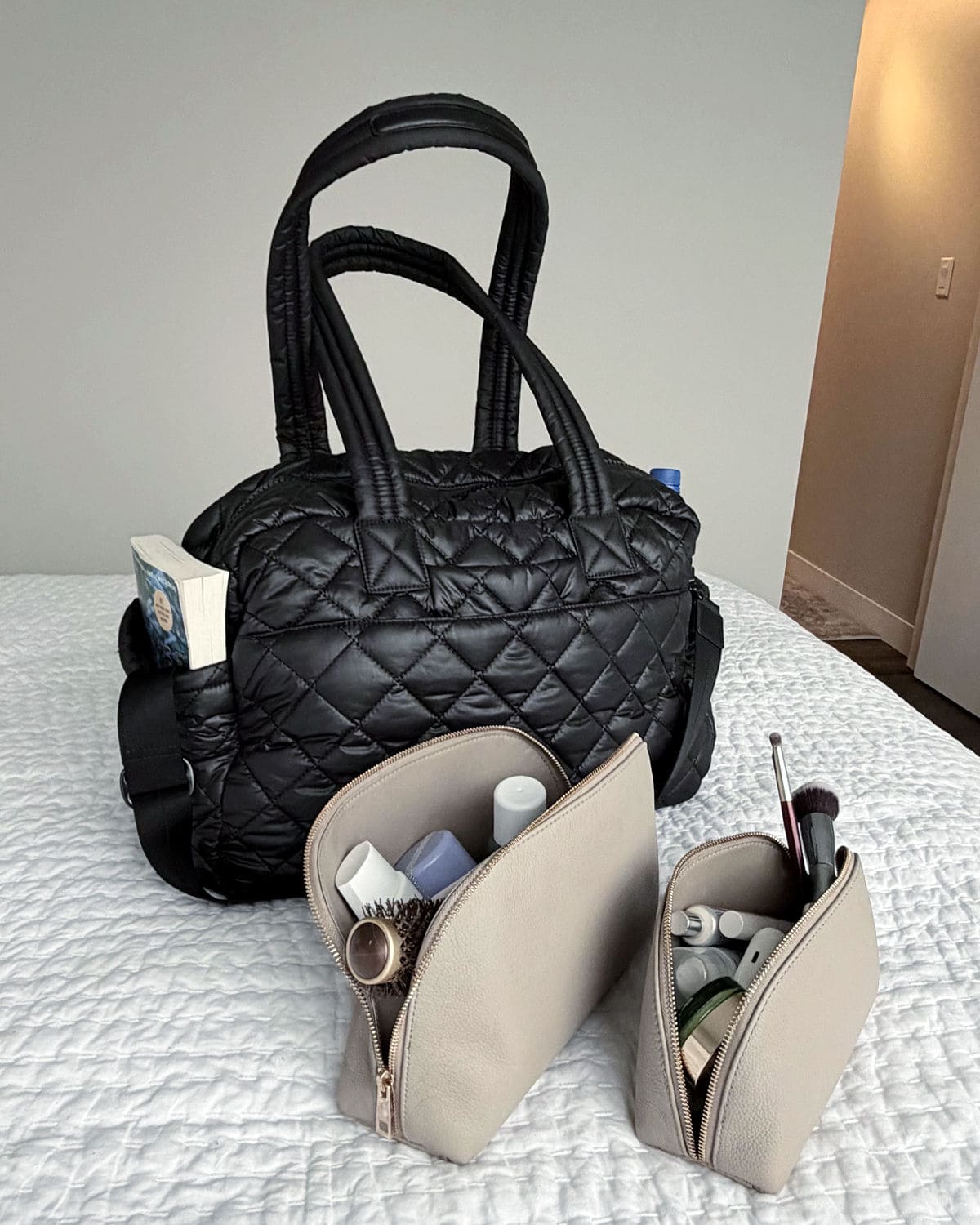
Hospital air is notoriously dry, and their basic soap feels like industrial floor cleaner. Bringing travel-sized versions of our own familiar products makes a cold room feel far less clinical:
- Toothbrush, toothpaste, and a gentle face cleanser
- Rich moisturizer, hydrating hand cream, and lip balm (your skin will thank you after hours in recirculated air). I love this Hydrating Hand Cream because the scent is mild and it slips into my purse.
- Hairbrush, hair ties or clips, and a mild dry shampoo to refresh without struggling through a full hospital shower
- Deodorant and travel tissues
- Eyeglasses, protective case, and lens wipes (plus contact lenses and solution if you wear them)
You can also make life easier by buying a premade travel toiletry set like this one.
Electronics and Charger Must-Haves
Waiting is a massive part of any hospital stay, whether we are passing time ourselves or waiting on news about a loved one.
- Cell phone, tablet, or Kindle loaded with books or audiobooks to make the hours pass more easily.
- An extra-long charging cable (8 to 10 feet): Hospital outlets are almost always placed in the most ridiculous spots…eight feet away behind the bed or tucked under a chair. A standard three-foot cord will leave you dangling over the edge of the mattress.
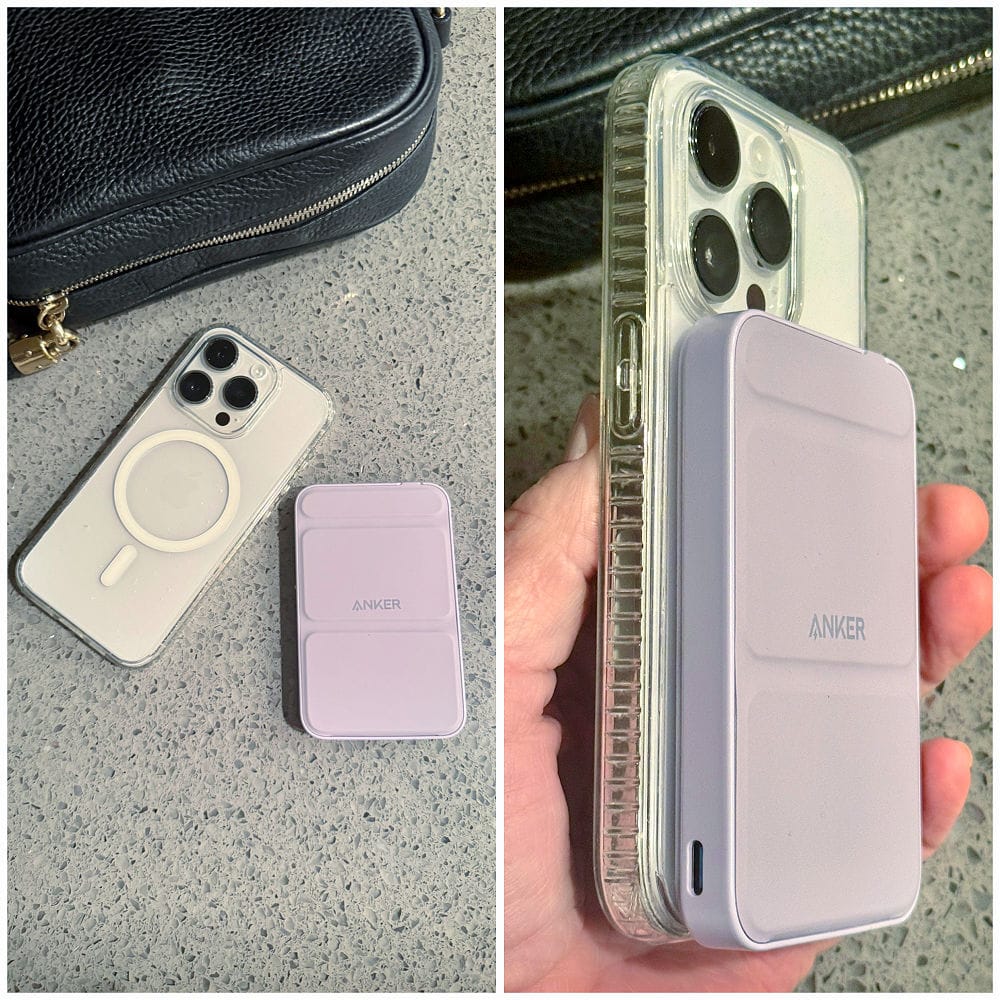
- A portable battery pack: Crucial if the nearest outlet is completely out of reach.
- Headphones or earbuds: Essential for tuning out roommate noise, squeaking shoes, and middle-of-the-night monitor beeps. I like these Shokz because they don’t fall out the way the Apple ones do.
- Watch charger and reading light: Small additions that make a big difference if you plan to read without keeping the main room lights on.
Small Comforts You’ll Be Glad You Packed
A few thoughtful extras make those long hours far more pleasant:
- A travel pillow or your own pillow: Put a bright, colorful pillowcase on it so it doesn’t get swept up in the hospital’s white laundry.
- A small throw blanket: Far cozier and warmer than stiff hospital sheets.
- A pen and notepad: Write down doctor statements, medication changes, and questions as they pop into your head so you don’t forget them during rounds.
- A folded reusable tote: Tuck this inside your main bag. Hospital stays have a way of collecting paperwork, prescription bottles, flowers, and odd items that somehow need to make it home.
What to Leave at Home
When it comes to a hospital stay, less is usually more. You want to have what you need without worrying about keeping track of valuables:
- Expensive jewelry, watches, and designer handbags
- Large amounts of cash or unnecessary credit cards
- Heavily scented perfumes or lotions (which can bother nurses, doctors, or roommates)
- Bulky electronics or too many extra outfits you won’t use
Preparing Your Home Before You Leave
If your hospital stay is planned, taking ten minutes to reset your house before walking out the door makes coming home infinitely better:
- Clear perishable food out of the refrigerator so nothing spoils while you are away.
- Water any houseplants and set the thermostat to a comfortable temperature.
- Double-check pet care arrangements and let a neighbor know where you’ll be.
- Place mail or deliveries on hold if you’ll be gone for more than a few days.
- Make your bed with fresh sheets. It sounds like a small detail, but coming home to a clean, made bed after a hospital stay is one of those simple comforts you’ll be especially grateful for.
If you’re looking for more resources, you might also enjoy my guide on how to advocate for yourself at the doctor and my post-surgery recovery checklist to help you prepare for the days after you or a loved one comes home.
Keep this hospital bag checklist saved somewhere accessible so you have everything you need in one place if the time comes.
Here’s hoping your bag sits in the closet gathering dust for a very long time. But when life throws a curveball, knowing you aren’t stuck with a three-foot phone cord and a stiff hospital gown makes a world of difference.
Save this list and share it with a friend. Have you ever packed something for a hospital stay that turned out to be an absolute lifesaver? Drop it in the comments because we can always learn a trick or two from each other!
Wish this post had been last year! Last August I went to the emergency room unexpectedly, and again unexpectedly ended up staying for 2 nights! You are right, I was not prepared. I took no bag or anything with me. My poor husband had to go home and search for everything I wanted and needed for the stay.
Needless to say, it was chaos! I did start packing an emergency bag after that, but it’s not nearly as complete as your list! Thank you so much! I’ve got to get working on this for both myself and my husband, because you never know!
Oh boy, that’s rough! I’m glad you’re prepared now.
Even if you are taking someone (or yourself) to the ER, pack a tote or backpack. This is also true if you will be waiting for someone having an outpatient procedure. ERs and hospitals are notoriously cold so wear long pants, bring a sweater and a puffy vest and you may even toss in a scarf. (I hate being cold). I also make sure I have a book or newspaper or something downloaded on my iPad and cords for my devices. You never know how long it will take.
I agree. I hate being cold too.
Great list! I always add a snack. Protein bar or pretzels.
Very thorough article. Thank you, Jennifer.
I’m familiar with the hospital stay protocol, but I sent this to myself by Messenger and Phone Messages to have it handy always. Then I decided to forward to all my friends who were very appreciative.
What a public service post you shared today!
You’re so kind, thanks for forwarding it to your friends!
Really great post. Great idea. Ya just never know.
Oh I wish I had this down! Just returned home ( again!) after an ER two day stay with nothing but my handbag/ charger and phone. They gave me a mini toothbrush and small Colgate toothpaste but washed up using one towel and warm wet PAPER towels from bathroom for my face. Yes paper!
This is an important reminder if there is a next time. Thanks Jennifer!
I’m so sorry to hear that Paulette! I hope you’re on the mend.
Just a hint (from a retired nurse). If you are having surgery which may see you pretty much bed bound and which may require the services of the dreaded bed pan, pyjamas are very tricky to manoeuvre, whilst the good old nightie or hospital gown (if soft enough) is much easier. At least from my perspective. Also, if you have an IV in your arm, long sleeves can get caught up with the tubing, or you may end up with blood on the sleeve. PJs are not recommended for abdominal surgery either.
Smart idea. I agree about the hospital gown if using a bedpan!!
Good info but it doesn’t address the person waiting at the hospital for the patient. As my dad went to the emergency room multiple times—over 20—I had certain things I’d grab to join him there. Sometimes I’d be at work when he went so I kept a phone charger and a paperback book (that would take long time to read) in my trunk. I also had an outfit that I’d wear if I was at home or had time to go home before going to the ER to wait: black turtleneck sweater, black pants, socks or trouser socks, comfortable shoes, and a cashmere shawl. Easy to put on quickly, helped keep me warm in the cold rooms, and I felt pulled together and in charge so I could concentrate on my dad. I may have looked a little odd in the summer wearing all that but, after sitting multiple times in the cold ER all night and often having to ask a nurse for a blanket, I was glad I had it on!
Great point! They’re always freezing.
Many of us wear glasses and or hearing aids. I bring to surgery and the hospital zip lock bags for glasses and hearing aids with labels – my name, date of birth, name of doctor if known. I tell all caregivers and ask to put it in my chart, that I wear hearing aids and talk about how to communicate with me, and how to handle my expensive and needed hearing aids.
That’s very wise! Thanks for mentioning that. I know many of us wear hearing aids.
Jennifer,
You are the best!! I love all your blogs and the women in this group.
I so appreciate today’s blog. It is so timely as I scheduled at hip replacement surgery today and my husband has to have a reverse shoulder replacement. I have never thought of all the items you recommend. We will be ready now for the surgeries and those unexpected trips to the ER rooms.
Thank you from the bottom of my heart!!
Wishing you and your husband a speedy recovery. It’s tough when you’re both incapacitated. Good luck!
Be aware that we often have to cut off your jeans and tops to apply monitoring patches, wires, IV lines and any dressings on wounds. It is difficult to get a shirt or top over a cast on a limb as well. Keep this in mind. In the ICU CCU you will be wearing a hospital gown and no outside bedding is usually allowed. The nurses will assist you or bath you as necessary and no shower or private bathroom is available in any of the units I’ve worked in. Plus, there isn’t any place to store anything personal. A suitcase will be given to family to bring back for discharge. The area around the bed is taken up with monitoring equipment and emergency supplies. You would be lucky to be able to keep a large purse. The overbed tray top is for nursing use and food trays and a water pitcher and glass if you are allowed to have one. Out on the floor may be different so check about what you’re hospital recommendations for personal belongings are before bringing a list like this one. Sorry Jennifer but most will not be allowed because of space.
Thanks Sydney. I guess it depends on the hospital and severity of the procedure and illness.
What a thoughtful post, such good information, we tend to forget the simplest things and this was an excellent reminder we ALL need. You never know when the need arises as you said. THANKS JENNIFER ❤️
Great ideas!
Were you in hospital? Feeling better?
Janet
Not this time, thankfully. I took this photo when my husband was in last time.
Thank you Jennifer this is such a fabulous reminder! I am going to print it up so I have it. For an awful moment I thought something had happened to you and yours so very relieved this is just a very useful list of what to bring.
Happy August!
Thank you, Jennifer! Great post for being prepared! Since retiring, I feel like we live at the hospital; this type of prep makes it much easier on both the patient and spouse. That being said, I hope you and your family are staying well!
Really enjoy reading your posts. They provide plenty of good style info and good reading material.
It happens more than we like, too! Be well Teri
Sending this to my friends/family. Extremely good list.
Wow, this is such a timely article. Very recently had surgery which was scheduled. I had ample time to pack what I needed and did so. However, I did not put it in a rolling case which would have been helpful. In addition, I didn’t include some of the things you suggested and also would have found them helpful. Another maybe helpful hint; don’t unpack those things when you first get home. Wait a few days. After being home for a few days our air conditioner went out and we had to go to a hotel. After that I had to return to the hospital because of surgery complications. Also, include some meal bars or snack bars you like with the things you pack.
Great tip. Snacks or protein bars are such a smart idea. I hope you’re on the mend.
Having worked in patient care areas I would suggest that clothing pieces should be any color but white.So often white gets mixed up with hospital linens,then lost.
Yes!
This is such great information. I know I always keep a list of my meds in my wallet. I feel like that’s especially important now that my husband has passed. I can’t imagine having to go to the hospital without him. Can’t think that far ahead. Thanks for the perfect list.
That’s smart of you Rosemary
Good morning! I just spent the better part of July in the hospital, 2 hours from home. These are great tips which I will use, as a transplant patient I am a frequent visitor at the hospital. Thank you for your column, I frequent it so often for not just fashion advice.
Thanks for being here. Wishing you a speedy recovery Tamara
This happened to you recently??
Two years ago with my husband and a year before that with me. Not fun to be unprepared.
Interesting things to think about;. One big caveat: I have sadly stayed in hospitals many times and have never been allowed to stay in my own clothes – never! Nor have I been anywhere that allows bringing my own blanket;. I’d hate for women to think that many hospitals are this amenable;. If you are in a hospital in your system, your records and meds are in their computers;. A list is a good idea but generally no longer needed;.
This is a wonderful post, Jennifer & a much-needed one! I made myself a “hospital stay list” after several unplanned hospital admissions last year. The most important one you mentioned is the long phone charging cord. A must! I also like to bring some very light cologne that just makes me feel fresher without being able to shower for several days & makes the room smell nicer when anyone comes in! One thing I want to mention is that I’ve made a list of the drugs I take, my allergies, chronic conditions & surgeries with dates. I bring this sheet with me when going to a new doctor & I have a copy of it which i keep in my wallet as well a copy for my husband to keep in his wallet. And vice versa: I have a copy of his in my
wallet & he has his info in his wallet too. You never know if one of us will be incapacitated & unable to give this info to the medics or doctors!
That’s so wise! I know mine but not all of his.
My husband and I do that as well.
Great advice! I have a smaller rolling computer bag that I use for overnight hotel stays, in it are charger cables for phone, panties, black pair, beige pair, pair of socks and nightgown for sleep, and thin pair of leggings for cold weather/rooms. Both my husband and I have kept a “go bag” for years, because of frequent work travels. Have a blessed week!
That’s so smart.
What great suggestions! This is something I have never given a moment’s thought. The only time I have stayed at a hospital was for childbirth. Both times I went home in under 24 hours. Now that I am hovering on turning 72, I guess I ought to think about how to make a possible future hospital stay as comfortable as possible. Though, I hope to be like my 96 year old mom. She has never been hospitalized except for childbirth!
Bless her!! You are so fortunate to have her.
I’ve subscribed to your blog for years and always enjoy it, but I just don’t generally leave comments anywhere… THIS, however, deserves a HUGE thumbs up and THANK YOU! Gonna pack my wheeled carry on asap… What wonderful advice! ❤️
I’m so glad this helped Gayle and I’m happy you’re part of our community. ❤️
Very good information that you don’t really think of.
Thank you
As a retired RN who worked for 45 years, I can say that a well-prepared patient is easier for stressed staff that are working in a fast-paced environment like the ER. If the hospital has MyChart, pertinent information is in the EHR. One’s cell phone is a great backup, especially if traveling or out-of-network. My take is staff in general try very hard to keep patients informed and comfortable. It’s funny how a few patients view the hospital as similar to a hotel stay but most are very anxious to get home.
If only it were a hotel. Thanks Mary
Hi Jennifer!
What a timely article. I have 2 surgeries scheduled in the Fall, and I will definitely use your list to pack my bag. Thanks so much for your inspiration.
Wishing you well with your surgeries Karen
Thank you for today’s post, Jennifer. I will put my own “just in case” bag together today. Take care!
Wonderful!
If multiple hospital stays are anticipated or if you know you’ll be home recovering for a while, I can recommend Kick It Pajamas. The company was founded by a cancer survivor and some women who cared for others with cancer, and the pajamas and other clothing are designed to make hospital stays and recuperation more comfortable and easier. The fabrics are so soft and the designs will accommodate things like IVs and drains. I had a set for my post-reconstruction hospital stays and it was nice to have something so practical and yet pretty.
Thank you Ellen. I’ll check those out. They sound perfect.
Jennifer, Thank you very much for this helpful article. I plan on making a “just in case” hospital kit asap. Appreciate you so much!
So happy this was helpful Peggy.
Unfortunately, my daughter and I have 9 years of experience in unexpected and extended hospital stays. Your list is great and includes almost everything we keep in our “go bags”. The one thing we both enjoy is the Amazon Firestick (or whatever streaming device you prefer). Hospital room TV is usually very limited in programming and has poor reception. It gives us something to look forward to watch in the evenings when things quiet down. And we love the Calm app for middle of the day naps or meditation and nighttime sound block. Highly recommend!
I have the Calm app and love it too. Great idea about the streaming device. I don’t watch tv very much but I’d sure want to in the hospital.
Jennifer. As a type A scout leader I pride myself on always being prepared, but I needed a reminder on this. It’s hard to admit to myself that I’m old enough to probably need this ready to go. Thank you!
I’m updating mine this week.
Very good info. I especially like your tip about having a fresh bed made for when you arrive home. What a luxury it is to come home into your own bed—especially one that is freshly made up. I always do this when I’m going anywhere.
I do too! Before any vacation or trip.
I hope you are on the mend and taking it easy. When I have had scheduled surgery, it is has been overnight, and packed only essential toiletries, wearing the same outfit home the next day, I like the hospital gowns post op – easier to manage and luckily, have been soft. I leave anything electronic home (except maybe my mobile phone) no credit cards, IPADS, even pillows and blankets. As a retired nurse I have seen too many items disappear, either intentionally or accidently (blankets can get caught up with the bed linen and thrown into the linen trolley). I am the complete opposite to my late mother who would be propped in bed on her pillow from home, wearing her luxe velvet bed jackets having just showered with her Bulgari gel and then cream. She had a beautiful pink quilted Christina Dior dressing gown which always was a hit with both the doctors and nurses. My mother would have thought all of those items were ‘life savers’
She sounds fabulous. And yes, we’re all so different.
A wheeled carry-all is the best!
A suggestion to add to the list: a 5×7 spiral notebook and a pen or pencil to take notes! This has been invaluable for us. It is a running log of doctor appointments and, when in the hospital, it is a place to record date, time, person’s name, treatment administered or notes throughout the stay. Take it to every doctor’s appointment.
Yes, great idea
Thank you for this great article!
Having had multiple orthorelated surgeries and hospitalizations, I cannot imagine bring that much stuff to the hospital. In the case of having to call 911 for an ambulance, you can forget about bringing anything. In the case of scheduled surgery, where is all that stuff going to go? Thye hospitals dont have the room to store things. What procedure are you having hwere you will end up wearing your own pajamas?
It is not that much stuff .. every room I know of has a locker per person in the room … hospitals don’t supply toiletries that I know of … my sister in law was in recently and a long phone charging cord was a godsend …. think it was an absolutely excellent article … just remember a book to help with the long days !
This is such a helpful article. Thank you for pulling this together. Unfortunately, I have no doubt the info will come in handy.