
How to Read Clothing Labels And Spot Fabrics To Avoid
These days, reading the clothing label is almost as important as trying the piece on. I’ve seen too many things that look polished in the store, then fall apart, lose their shape, or turn needy the minute they hit the laundry room. Between odd fabric blends, flimsy materials, and care instructions that read like a part-time job, it pays to know what you’re looking at before you buy it.
A clothing label can tell you a lot before you ever get to the register. It tells you how a fabric may wear, whether it’s likely to wrinkle or shrink, and how much trouble it’s going to cause once it gets home. These days, that tiny tag often tells the truth better than the garment does on the hanger.
Cracking the Code: Understanding Symbols
Those little symbols on a clothing tag can look like a secret language, but the basics are actually simple once you know what you’re looking at. You don’t need to memorize every symbol on earth, but understanding the common ones can save you from buying something that needs far more upkeep than you want to give it.
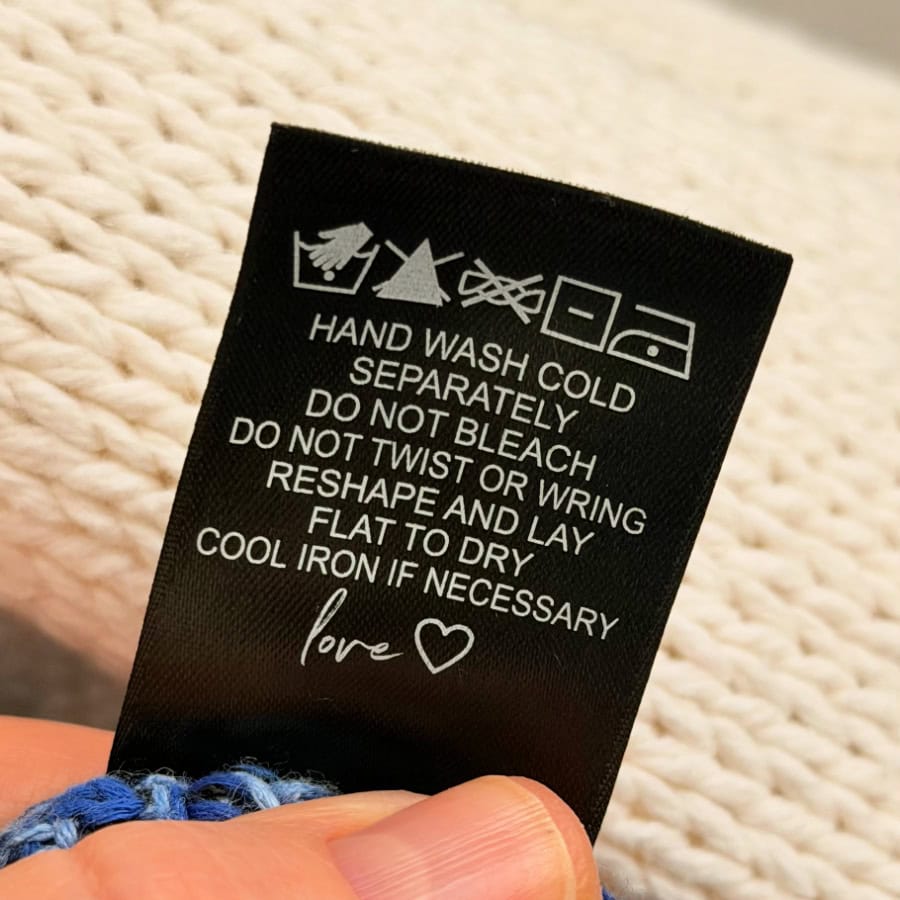
Those little symbols on a clothing tag can look like a different language, but they’re actually pretty simple once you know what to look for.
- The Washtub (Washing): This tells you how to wash the item. A hand in the tub means hand wash. Lines under the tub mean to use a gentle or permanent press cycle. The dots inside the tub indicate water temperature: one for cold, two for warm, and three for hot.
- The Triangle (Bleaching): This refers to bleach. A plain triangle means bleach is allowed. A triangle with an X through it means skip it.
- The Square with a Circle (Drying): This is the dryer symbol. The dots indicate heat level. If there’s an X over it, don’t put it in the dryer.
- The Iron (Ironing): This tells you how much heat the fabric can handle. One dot is low heat, two is medium, and three is high.
Fabrics to Approach with Caution
Not all fabrics are created equal. While I love a good deal, sometimes a bargain price comes with a high-maintenance fabric or one that just won’t last. Here are a few to watch out for:
1. Cheap Synthetics
Not all polyester or acrylic is bad, but the cheaper versions often pill, cling, and trap heat. If it feels thin, stiff, or shiny in the store, I’m cautious.
2. Low-Quality Viscose and Rayon
These can feel lovely on the rack, then shrink, wrinkle, or lose their shape after washing. If I see viscose on the label, I check the care instructions before I get attached.
3. Scratchy Wool Blends
If the label says wool but doesn’t specify merino or cashmere, test it against your neck or inner arm. If it feels itchy in the store, it won’t improve at home.
4. 100% Cotton With No Give
Cotton is breathable, but some all-cotton pieces wrinkle fast or bag out with wear. A little elastane can make a garment much easier to live with.
Fabric Myths
Is all polyester bad?
No. Some synthetic fabrics are excellent, especially for travel. The problem is the cheaper ones, which often feel hot, pill quickly, and look tired fast.
Does 100% cotton always shrink?
Not always. Many brands use pre-shrunk cotton, but heat can still cause shrinkage. I wash mine in cool water and avoid a hot dryer.
Can I wash silk at home?
Sometimes. Many silk pieces can be hand-washed in cool water with a gentle detergent. I’d still dry clean anything structured or expensive.
Is expensive always better?
No. Price can reflect quality, but not always. The label often tells you more than the brand name does.
The Laundry Room Toolkit
Every once in a while, I bring home something I love even though the care label is a bit precious. The good news is, a few simple laundry basics can make those delicate pieces much easier to care for, so they don’t end up ignored in the back of the closet.
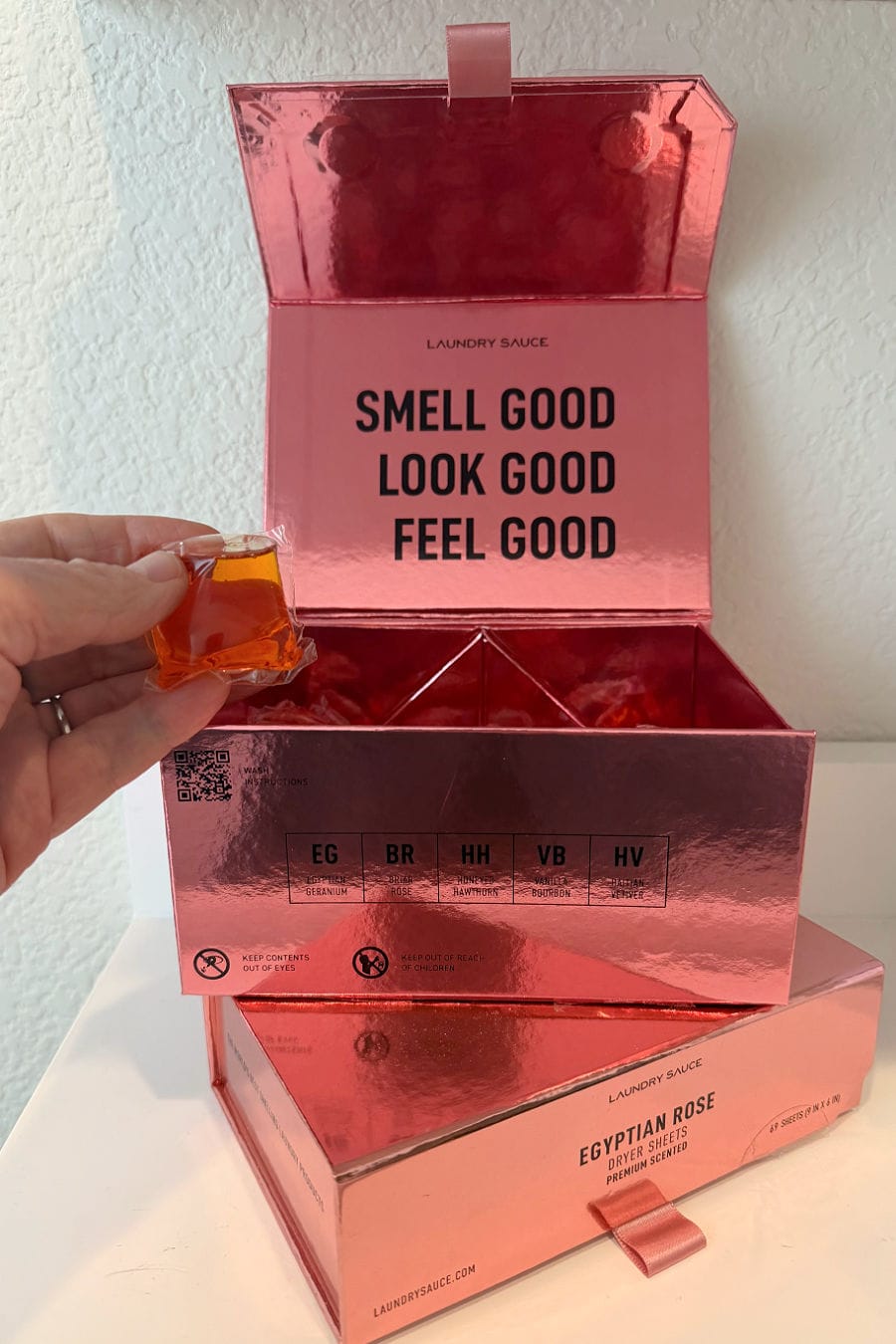
I CHOSE THE EGYPTIAN ROSE, AND THEY’RE AVAILABLE IN SEVERAL OTHER FRAGRANCES
A few months ago, Laundry Sauce sent me their laundry pods and dryer sheets to try. I honestly thought the whole thing sounded a bit silly because, really, how exciting can laundry detergent be? But then we ran out of our regular brand, I tried them, and I hate to admit they won me over. The scent is lovely without being too much, and even my husband likes it. They’re free of parabens, phthalates, bleach, and dyes, and the concentrated formula does a good job on stains.
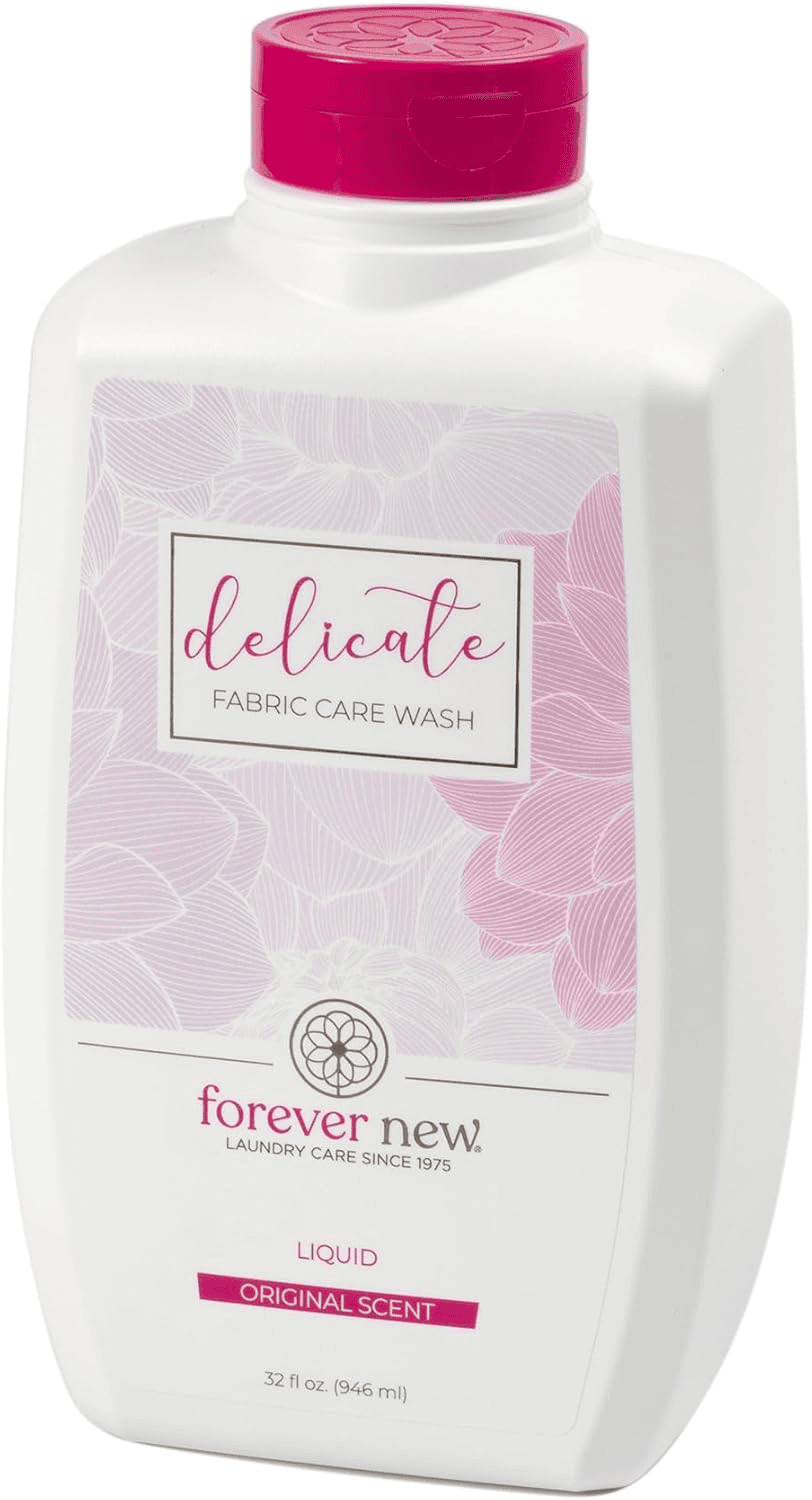
Delicate Wash Detergent: Standard detergents can be quite harsh. Keep a bottle of gentle, pH-neutral soap specifically for your silks and fine knits. It’s much kinder to the fibers and helps maintain those vibrant colors we love.

I also like this Laundress Wool and Cashmere Shampoo for my delicate sweaters. It has a light cedar scent that smells refreshing and works in the machine or for hand washing.
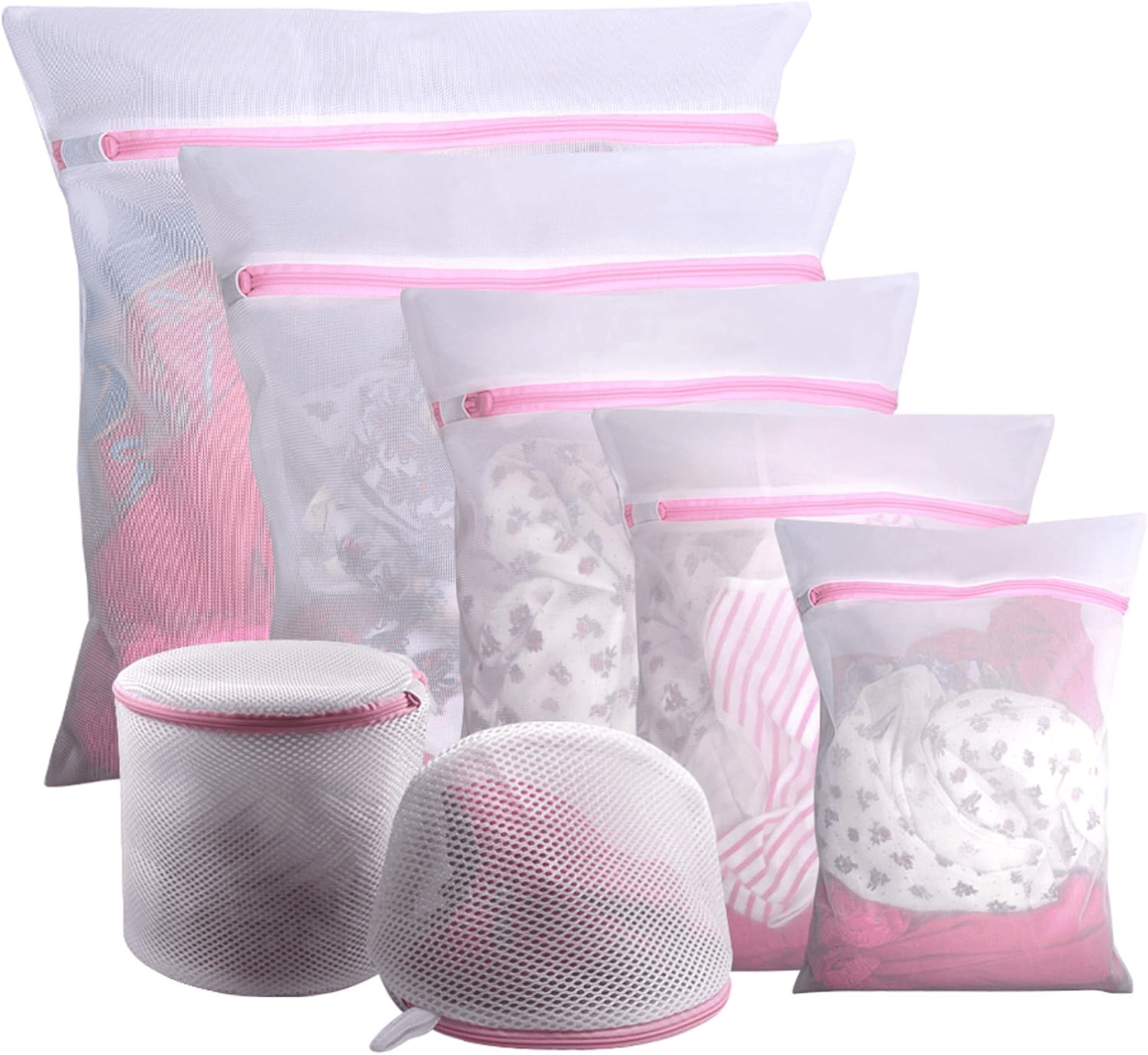
Mesh Laundry Bags: These are an absolute must. I use them for anything with lace, sequins, or very thin straps. They prevent your delicate pieces from getting tangled up with heavy items like jeans or towels, which is how most snags happen.

A High-Quality Fabric Shaver: Pilling is a fact of life for many knits, but it doesn’t mean the garment is ruined. This Gleener is the best lint brush I have ever used, and I’ve gifted it to everyone on my Christmas list. This brush, along with my sweater shaver, keeps my sweaters looking brand new. This also works great on upholstered furniture, knit blankets, and coats.
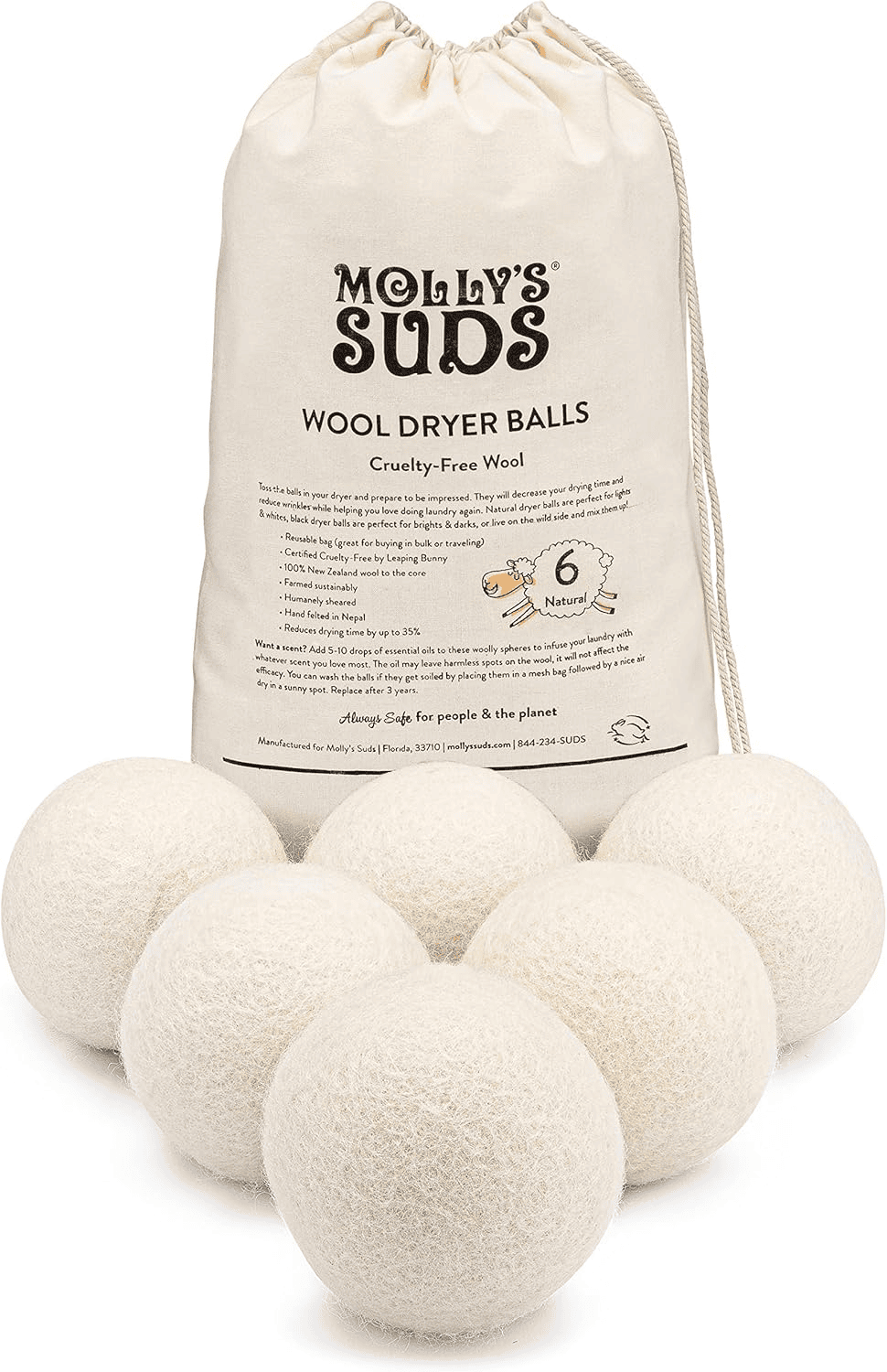
Wool Dryer Balls: I’ve mostly stopped using traditional dryer sheets because they can leave residue on fabric. Wool dryer balls soften clothes without that coating and can help shorten drying time, too.
That little label may not look like much, but it can save you money, frustration, and a few regrettable laundry experiments. These days, it often tells the truth better than the garment does on the hanger.
Do you check the label before you buy something, or only after it causes trouble?
Thanks for this post – very informative! I hesitate to bring this up, but I’ve read in a few places recently that laundry (and dishwasher) pods release microplastics into wastewater – and thus the environment – since they’re made of PVA. As to whether absorbing plastic is going to harm us in the long run hasn’t yet been determined. It probably doesn’t matter for people our age, but I worry about my grandchildren who will have a lifetime of plastic absorption.
Jennifer,
Thanks for the laundry tips. I didn’t know about some of these products.
I appreciate this post and the links that accompany it. Thank you for doing the research and explaining these very important issues.
I always read the labels on everything I purchase. I don’t always know what the symbols meant so this is very helpful.
Many years ago my dry cleaner told me that most garments, even delicates, can be dried for 20 minutes in the dryer on the low setting then hung out to finish drying. I use this method for most of my clothing, including jeans, sweaters and delicates, and it works great. I find that putting them in the dryer for a short time helps the garments return to their original shape after washing.
Great post! I ALWAYS check the label before purchasing. It’s a must! I’ve found Dawn works great on stains and handwashed items (carry a small bottle when traveling), a little goes a long way!
Great article about labels that are confusing. I check labels most of the time; laundry instructions are important as I hate to handwash anything. I use laundry bags to sort hand washables (lingerie) and socks/stockings/tights and never lose socks. Just sort by white/light colors and dark colors. Couldn’t live without those bags! Also good for more delicate sweaters or tees.
This is a great post. I look for the words on the tag not the symbols b/c I didn’t always know what the symbols meant. A few other thoughts: (1) (Almost) always wash in cold water: it works and saves money; (2) Don’t wash delicate items (even in bags) with jeans and heavier fabrics. To get the best from your washing and drying, separate your laundry by weight and type (as well as color) so they dry at the same time and your still damp jeans aren’t lying on your dry tee shirts. (3) Bring your experience to new purchases: my husband’s flannel shirts now come with new instructions: same shirts, more special requirements. We ignore them lol.
LOL
I have a graphic picture of all the laundry symbols I bought on Amazon hanging in my laundry room.
My dilemma is I have a pair of EF wool pants that say dry clean, but the closest dry cleaner is 2 hours away. I can spot clean, but eventually the whole garment will need cleaning. Any suggestions??
I would spot clean
I loved your laundry advice! I’m going to try the Laundry Sauce pods. I’ve used the wool dryer balls and have added a few drops of a lavender oil to the ball.
Dianne
I love the idea of lavender oil on the ball!
I am a big fan of Tencel. It does what rayon does but without the “cheap” effect.
I always check the fabric content labels because it decides if I will buy the item or not. I’ve found that any viscose/rayon knit will stretch and pill no matter what the cost so that’s on my “no” list which eliminates a lot of items now days. I wash a lot of my laundry wrong side out which prevents some pilling, color transfer and fading and dry them wrong side out as well. It seems to keep my clothing looking better longer. I live where it’s very hot (going to be 106 here this weekend in AZ) so if an item is see-through at all I do not purchase it because I’m not going to wear a camisole or other item under a top that is already going to be really warm.
Do wool dryer balls ever need to be replaced? I’ve been using the same ones for several years now. They seem fine, but do they have a life span?
I haven’t replaced mine and I’ve had them for years too!
I use the laundry bags in a slightly different way. My husband handles the laundry and figuring out what needed to line dry was more than he wanted to be responsible for. So if it is in the laundry bags it needs to be line dried. Problem solved. I also use them for any item with strings that can get tangled. So dog leashes in one or an apron is another example. Works great. I have had my laundry bags for years. They hold up great.
Brilliant idea!! My husband often changes over the laundry and that’s when mishaps happen with my cashmere.
No need to buy small packets of Delicate wash (Forever New)- I always bring a ziplock baggie of it along w a plastic TB on our twice yearly 5-6 week overseas trips. That, along with a few liquid Tide packets or a small GoToob of liquid Tide or The Laundress Stain Solution for stain treatment, allows me to hand wash along the way (with a laundry or laundromat stint once or twice for big items).
Thanks for yet another great post, Jennifer
Thanks for this info!
My daughter just showed me how to use my iPhone to read the symbols by taking a photo of the label. Select the photo, select the info button and select “Look up laundry care,” and you can see what each symbol means on your phone. I love it!
So helpful!
Great idea!
I love that you deciphered the labels. Most often, I was my items in cold water and hang to dry. But, it is definitely good to know what the symbols mean.
I always, always follow the care instructions on the label. My husband does not, which is why he is not allowed to “help” me by washing any of my clothing. My favorite wash for hand knits, wool, cashmere and lingerie is Soak. I got to know it as a yarn shop owner (now happily retired, and knitting more than ever) and love that it is gentle, no-rinse, and comes in an assortment of scents, plus unscented. Keep knitting, Jennifer!
I am looking for a summer project to knit right now!
Time for a deep dive into Ravelry!
I have been 🙂
Thank you so much for the help with the laundry labels! I have always had a time deciphering those, and you were such a huge help. So appreciated!
Delicate also offers their detergent in a powdered form in small packets. I take one or two with me on trips and I’m able to hand wash bathing suits and other things at the hotel/rental. Works great and smells good, too.
I usually use a bit of mild shampoo to hand wash things when I travel but this is much smarter Judy! Thanks.
Hi Jennifer: This was a GREAT posting. While I thought I knew most of what the labels mean there were a few symbols I was unsure of, but you cleared that up.
Thanks!!
Great read! Yes. I ALWAYS check the label before buying. It tells me whether I’m going to buy it or not. Generally I think the fabrics have gotten better and less risky. I’ve even washed (gently) some “dry clean only” items and they’ve come out fine. My goal is to teach my 2 adult children to read the labels too! Thanks for all your wisdom!
I’m the same. Especially with sweaters etc.
Such a great post. I will keep this as a reference. Thank you!
Great information. I never knew what most of the symbols stood for. I need a chart with all this on it.
Next on your list to decipher is the international symbols on washing machines and more rarely dryers.
Figuring that out is a nightmare!
Good one!
Thank you for explaining care tags! One note: I’ve noticed lately that some garments (my Frame jeans, my Frank & Eileen pieces, etc.) say to turn the garment inside out for washing. Why is that? Thank you.
It’s supposed to help keep fabrics from fading and I find it also cuts down on wear and tear on the surface of clothes.
I have read that soaking a dryer-shrunk knit in hair conditioner in water can help one to re-size and re-shape the garment. Maybe you could report back if that non-hypothetical event was recent…
I will try it. I usually just rewet the entire garment and try to stretch to reshape. Sometimes it works, others not so well.
Big fan of Forever New (great on sweaters, takes care of stains, leaves them feeling soft), the Laudress stain formula, and the gleener. All just terrific. I use the velour end of the gleener most and save the rougher end for the resistant pills. Seems easier on the sweaters.
Agreed, and sometimes I find a gentle pass with the electric shaver is even gentler.
Jennifer, I love the fact that you present so many different ideas in your blog. I look forward to reading every post You present absolutely every aspect of your subject! Your sense of humor and writing style are so engaging and enjoyable. Thank you!
Kathy
Thanks for reading Kathy!
Kathy – you have stated this so well! I agree!!
I always check the care of a product and the fabric. I have to do all of my shopping online. I just washed my Quince sweater, cotton with 3% cashmere in the washing machine and held my breath. I payed it flat to dry and then hung it on a satin hanger. It tightened at the wrists and waist but otherwise looks okay. Whew! I no longer can hand wash anything with my arthritic hands.
You might find a gentle shot of steam from the iron followed by a gentle tug will loosen those right up.
Thank you for this very helpful post, Jennifer. I’m going to be shopping for my Easter outfit tomorrow and I’ll definitely be checking the care label before I commit to anything.
Good morning…my problem isn’t reading the tag and following instructions, it’s the composition of what the fabric is made of and understanding what it is. What the heck is viscose (I know I need to google it, lol). I’m more frustrated with finding nice quality and made with threads that I like and feel comfortable in and the item isn’t cheap looking etc.
Boy did I need to vent on that one………have a great day.
I think we all struggle with those too Robin!
When I saw the title of this post I thought, ‘How boring. Do I really want or need to read this’ – I am so glad I did. I have never paid much attention to care labels (I only looked for dry clean only – I usually steer away from them) but I will now. This info can prevent me from ruining outfits in the future. Thanks so much for the explanation of the symbols and info about fabrics. Very informative. Have a great day.
I’m glad it was helpful Peggy. Happy Tuesday.